
Strength Training for Beginners at Home
How often, how heavy, how to progress and what to buy first.
Quick answer
Jump to section
How often
Train 2 to 3 days a week when you are starting out. That is ACSM's advice for beginners (ACSM). The CDC sets a lower floor for health: at least 2 days a week of muscle-strengthening activity that works all major muscle groups (CDC).
The two numbers do not conflict. The CDC's "2 or more days" is the minimum for health. ACSM's "2 to 3 days" is training advice for people who are new to lifting. Two days is a good place to start, and a third day is fine if you recover well.
Here are two ways to lay out a week. Both meet the CDC's minimum of 2 days, and the second adds a third day as ACSM's range allows.
| Day | Two-day week | Three-day week |
|---|---|---|
| Monday | Full-body strength | Full-body strength |
| Tuesday | Rest or easy walking | Rest or easy walking |
| Wednesday | Rest | Full-body strength |
| Thursday | Full-body strength | Rest or easy walking |
| Friday | Rest | Full-body strength |
| Weekend | Walk or play | Walk or play |
Spread the days out. Training on non-consecutive days, such as Monday and Thursday, gives you time between sessions. That is our practical suggestion rather than a sourced rule, so adjust it to your schedule.
How heavy: the 8 to 12 repetition range
Choose a weight you can lift for 8 to 12 repetitions. ACSM advises beginners to use loads that match an 8 to 12 repetition maximum, or 8 to 12 RM (ACSM). An 8 to 12 RM is the weight at which you could do between 8 and 12 repetitions but not many more.
In practice, that means picking a dumbbell that feels challenging by the last few reps of a set and still lets you finish the set. If the set still feels easy long after 12 repetitions, the weight is too light. If you cannot reach 8, it is too heavy.
To find your starting weight for an exercise:
- Pick a weight you think is light and do a set.
- If you finish 12 repetitions and feel you could do many more, go up.
- If you cannot reach 8 repetitions with control, go down.
- When 8 to 12 repetitions leaves you tired but in control, write that weight in your log.
This is where adjustable dumbbells help. You can find the right weight for each exercise without buying a rack of pairs. A kettlebell works too, as long as the weight lets you control the movement through the whole set.
How to progress
Add load slowly. ACSM advises increasing the load by 2 to 10% when you can do one or two repetitions more than your current target (ACSM).
Here is how that looks as an example, with a target of 10 repetitions. If you can do 11 or 12 with the same weight, you are ready for a small increase. After you add load, you will probably do fewer repetitions, and you work back up.
A simple log looks like this:
| Date | Exercise | Weight | Repetitions |
|---|---|---|---|
| Week 1 | Dumbbell row | Your weight | 10 |
| Week 2 | Dumbbell row | Your weight | 11 |
| Week 3 | Dumbbell row | A small increase | 8 to 9 |
A progress log keeps you honest. Write down the exercise, the weight and the repetitions at each session. A note takes seconds, and it shows when it is time to move up.
Small steps matter because dumbbell jumps can be large. Check the increment on your dumbbells: a set with small increments makes a 2 to 10% change easier to hit.
Exercise order
Do the big exercises first. ACSM says to do multi-joint exercises before single-joint exercises (ACSM). A multi-joint exercise, such as a squat or a row, uses more than one joint and more muscle. A single-joint exercise, such as a biceps curl, isolates one.
Doing the harder, multi-joint exercises while you are fresh lets you give them your best effort. Save the smaller exercises for the end of the session.
A simple order for a full-body day:
- A leg exercise, such as a squat or a lunge.
- A pushing exercise, such as a press on a weight bench or from the floor.
- A pulling exercise, such as a dumbbell row.
- Single-joint work, such as curls or triceps extensions.
- A core exercise.
Rest between sets
Rest long enough to repeat your effort. For muscle size, ACSM suggests 1 to 2 minutes between sets. For intermediate and advanced strength training, it suggests 3 to 5 minutes (ACSM).
If your goal is muscle size, 1 to 2 minutes is the range to use. Use a clock or the timer on your phone, and resist the urge to rush. Rest also helps you hold good technique on the next set.
| Question | Answer | Source |
|---|---|---|
| How many days a week? | 2 to 3 for beginners; 2 or more for health | ACSM; CDC |
| How heavy? | A load you can lift for 8 to 12 repetitions | ACSM |
| How to progress? | Add 2 to 10% when you can do 1 to 2 more reps | ACSM |
| What order? | Multi-joint before single-joint | ACSM |
| How long to rest? | 1 to 2 minutes for muscle size | ACSM |
For older adults
Experts recommend four types of exercise for older adults: endurance, balance, strength and flexibility (NIH News in Health). Strength exercises include lifting weights or using resistance bands.
NIH News in Health also says, "Older adults can exercise safely, even those who have physical limitations" (NIH News in Health). That is encouraging, and it is a reason to start gently. If you have a health condition, talk to your doctor about which exercises suit you.
A strength plan for older adults can use the same basics as this guide: a manageable load, a few exercises that cover the major muscle groups and slow progress. Resistance bands are a gentle way to begin.
Minimal equipment to start
You do not need a full gym. A pair of adjustable dumbbells or a kettlebell is enough for the first months. A weight bench adds pressing and incline options. Resistance bands, which NIH lists as a way to do strength exercises (NIH News in Health), fit in a drawer.
Add a power rack and a barbell later, when you want to squat or press heavy loads. By then you will know your routine, and you will buy the rack for how you train rather than for how you imagine you will.
A first session might look like this:
- Warm up with light movement, such as an easy walk.
- Do a squat or lunge variation with a light dumbbell.
- Do a dumbbell press on a bench or from the floor.
- Do a one-arm dumbbell row.
- Finish with a core exercise and some gentle stretching.
Keep the first sessions easy and learn the movements before you push the weight. Technique matters more than load in the first weeks, and a good habit is easier to build than to fix.
Cover the floor with a mat or flooring before you start, so that your equipment and your floor are protected.
Check with your doctor before starting a new exercise program. This page gives general information, not medical advice.
Gear that helps
-
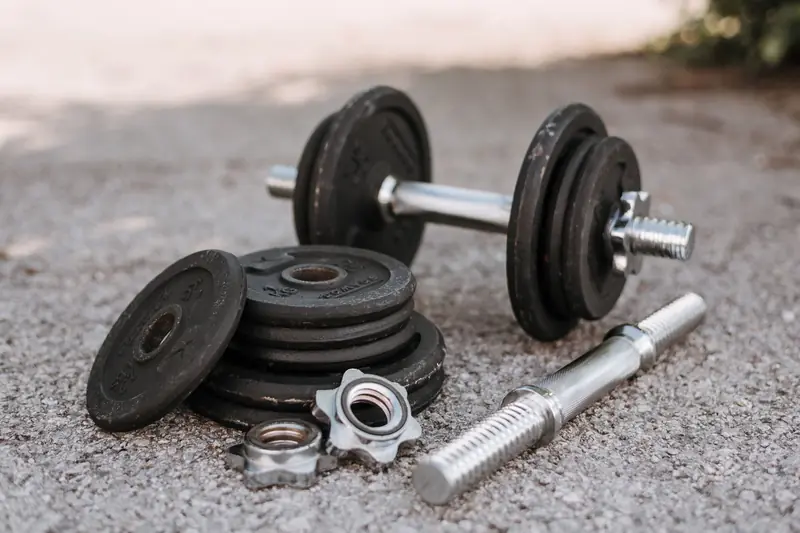
Best Adjustable Dumbbells for Home Gyms
One set covers many exercises and lets you find your 8 to 12 repetition weight.
-
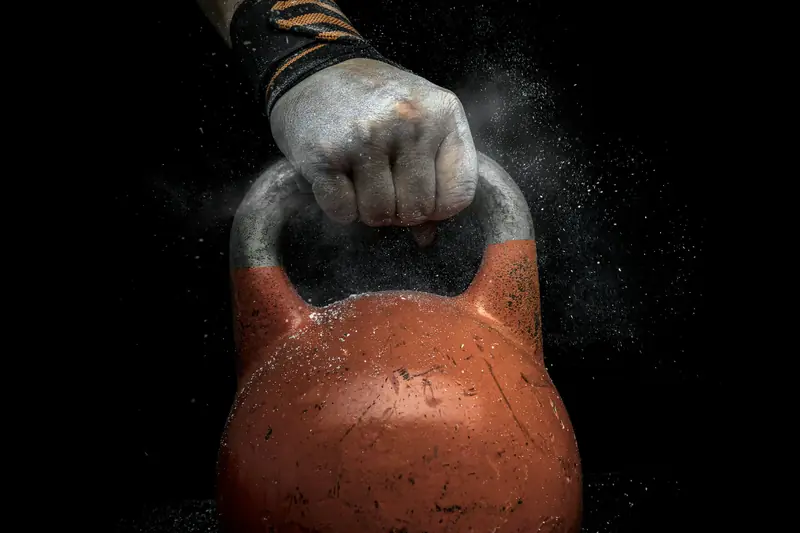
Best Kettlebells for Home Workouts
A single bell is a compact way to start with a few movements.
-
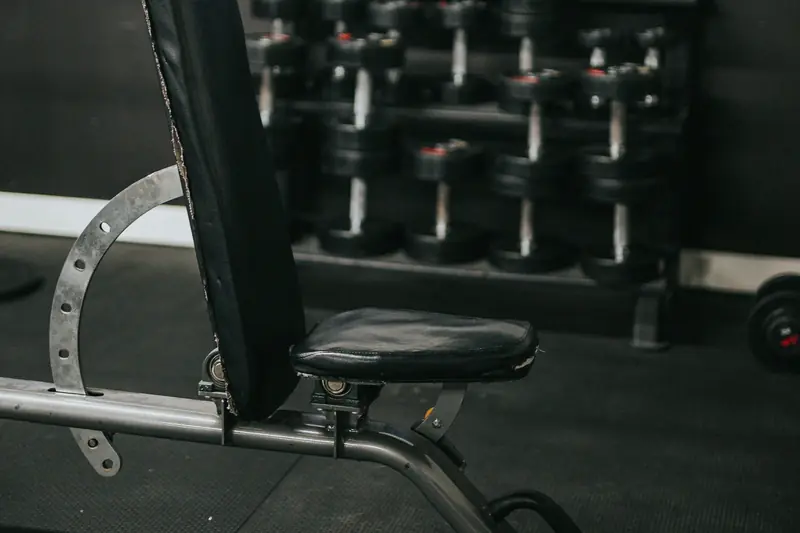
Best Weight Benches for Home Gyms
A bench adds pressing, rowing and incline work to dumbbells.
FAQ
How many days a week should a beginner lift?
How long should I rest between sets?
For muscle size, ACSM suggests 1 to 2 minutes between sets (ACSM).
Is strength training safe for older adults?
NIH News in Health says older adults can exercise safely, even those with physical limitations (NIH News in Health). Talk to your doctor if you have a health condition.
Related
-
Buying guide
Best Adjustable Dumbbells for Home Gyms
Weight range, increments, adjustment type and footprint, side by side.
-
Buying guide
Best Kettlebells for Home Workouts
Material, handle, markings and base, for fixed and adjustable kettlebells.
-
Buying guide
Best Weight Benches for Home Gyms
Flat or adjustable, capacity, positions and storage, side by side.
-
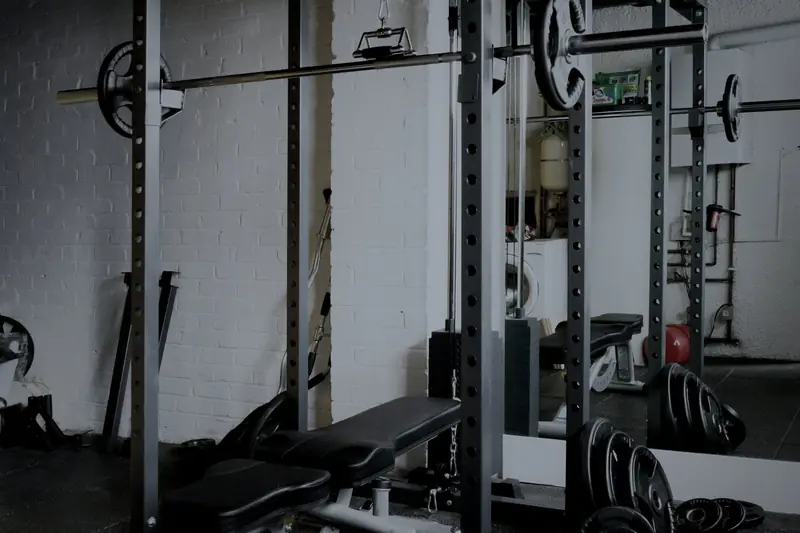
Buying guide
Best Power Racks for Home Gyms
Height, footprint, safeties and capacity for a rack that fits your room.
-
Guide
How Much Exercise Do You Need Per Week? The Official Numbers
The official weekly numbers for adults and kids, with sample home-gym weeks.
-
Guide
How to Build a Home Gym: Space, Budget and First Buys
Space, clearance, strength gear, cardio, flooring and safety, in order.
Get the Home Gym Starter Checklist
A printable 8-point checklist built on CDC and ACSM guidance and treadmill manuals. Free, and sized to pin up next to your equipment.