
How to Build a Home Gym: Space, Budget and First Buys
Space, clearance, strength gear, cardio, flooring and safety, in order.
Quick answer
Plan around the weekly targets: 150 minutes of moderate or 75 minutes of vigorous cardio plus strength on 2 days (CDC). Measure first, and follow your treadmill manual's clearance; if you do not have it, leave at least 8 ft behind and 2 ft on each side (ProForm manual). Buy flooring, dumbbells and a bench first.
Jump to section
Start with what the guidelines ask for
Plan the gym around what you need to do each week. The CDC asks adults for 150 minutes of moderate-intensity aerobic activity, or 75 minutes of vigorous activity, plus muscle-strengthening activity on 2 days (CDC). That is two jobs: some cardio and some strength.
Write down which job matters most to you right now. If you mainly want to walk or run, cardio comes first and strength can start small. If you want to build muscle, put strength first and add cardio later. Our guide to how much exercise you need per week explains both targets in detail.
A short list of goals keeps you from buying equipment you will not use. Most home gyms fail not for lack of gear but because the gear does not match the routine.
Measure your space and machine clearances
Measure the floor, the ceiling height and the path to the room before you order anything. Large items such as racks and treadmills have to get through doors and up stairs, and then they need clear space around them.
For a treadmill, the manual sets the clearance. The ProForm Trainer 8.0 manual says to place the treadmill on a level surface with "at least 8 ft. (2.4 m) of clearance behind it and 2 ft. (0.6 m) on each side", indoors and away from moisture and dust (ProForm manual).
Those figures are one model's. Another manufacturer can ask for less. A commercial Matrix manual, for example, lists a smaller landing zone of 78.75 in (2,000 mm) by 39.5 in (1,000 mm) behind the machine (Matrix manual). Treat that as a model-specific example, not a general minimum.
For other machines, read the product page or manual for the dimensions in use and the folded size. Follow these steps before you order:
- Measure the room's floor space and the lowest ceiling point, including beams, lights and garage door tracks.
- Measure the doors, hallways and stairs the equipment has to pass through.
- Read each product's dimensions in use and, for folding gear, its folded size.
- Add the clearance the manual asks for around any machine.
- Mark the footprint on the floor with tape and walk around it. A spot that feels tight on the floor will feel tighter with a loaded bar.
Strength first: dumbbells, bench and rack
Strength equipment can start small. A pair of adjustable dumbbells and a weight bench give you a base for the two strength days a week that the CDC guideline asks for.
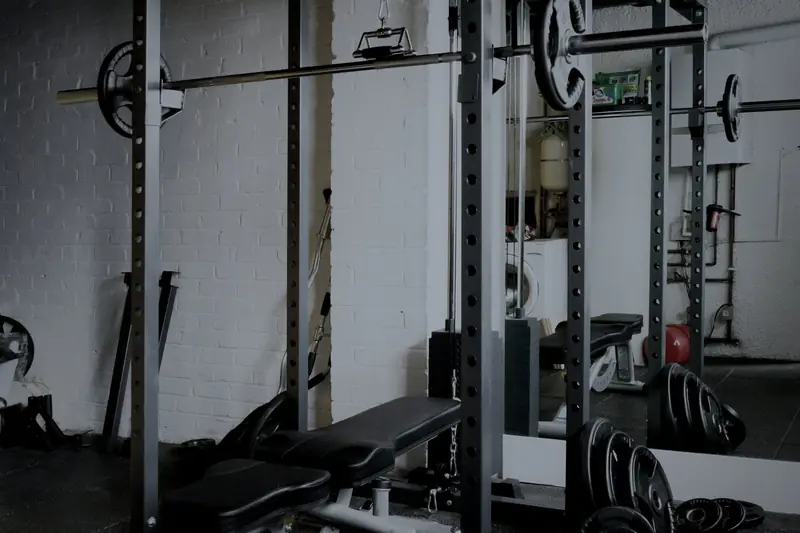
Add a rack when you want to squat or bench press with a barbell. A power rack gives a cage with safeties, and a smaller rack suits a low ceiling or an apartment. If the rack mounts to a wall, remember that wall studs are normally 16 or 24 in apart (Zircon manual), and follow the spacing the rack's maker requires.
If you share the room with other uses, favor gear that stores easily: dumbbells in a tray, a bench that folds, a rack that folds to the wall. Gear that vanishes after a workout is gear that you will set up again next time.
Beginners do not need a rack on day one. Our strength training for beginners guide shows how to start with weights you can handle without one.
Choosing cardio
Pick the cardio machine you will actually use. A treadmill suits walkers and runners. A bike is the easiest to start. A rower works the whole body but takes technique. A folding treadmill fits a small room better than a fixed one.
This table sets out what to check for each type:
| Machine | Check first | Good fit for |
|---|---|---|
| Treadmill | Clearance in the manual, outlet, listed user weight | Walkers and runners with floor space |
| Walking pad | Max speed, belt length, storage height | Walking in a tight room or under a desk |
| Exercise bike | Seat adjustment, footprint, subscription | Beginners and shared homes |
| Rowing machine | Length, storage, noise | Whole-body cardio where it can stand upright |
See treadmill vs walking pad and rowing machine vs exercise bike if you are torn between two types.
Think about noise, too. Machines that run through a motor or a flywheel make sound, and the floor beneath them carries it. A mat or flooring helps, and so does placing the machine against an interior wall.
Flooring
Flooring protects the floor from weights and machines and makes the room quieter. Our home gym flooring guide compares materials for concrete, carpet and garage floors.
Lay the floor before you assemble heavy equipment. It is much harder to slide tiles under a rack that is already bolted together. If a treadmill is part of the plan, remember that its manual asks for a level surface.
Power and electrical safety
If your plan includes a motorized machine, check where the outlet is. The ProForm manual states: "The treadmill must be grounded." It says to plug it into a surge suppressor, then into a properly grounded outlet, and not to modify the plug. If the plug does not fit the outlet, the manual says to have an electrician install a proper outlet (ProForm manual).
That is one model's manual. Read yours, and follow it.
Kids and pets
If children or pets can get into the gym, plan for it from the start. The ProForm manual says to keep "children under age 16 and pets away from the treadmill at all times" (ProForm manual). The CPSC advises using a treadmill only in a locked room away from children and pets, and unplugging it when it is not in use (CPSC).
A door that locks is the simplest control.
Budget tiers
We do not type prices by hand, so these tiers are about order, not cost. Check the current price on Amazon through the buttons in each buying guide.
| Tier | What to buy | Why |
|---|---|---|
| First | Flooring, adjustable dumbbells, a bench | Covers strength work in a small footprint |
| Next | Cardio you will use: bike, rower, walking pad or treadmill | Meets the aerobic target in any weather |
| Later | A rack and barbell, a folding or fixed treadmill | Adds heavy lifting and more cardio options |
Buy the first tier, use it for a few weeks, then decide what is missing. That keeps you from filling the room before you know how you train.
Before you start any new exercise program, consult your doctor, especially if you are over 35 or have health problems. Begin each workout with 5 to 10 minutes of stretching and light exercise, as the ProForm manual advises (ProForm manual).
Gear that helps
-
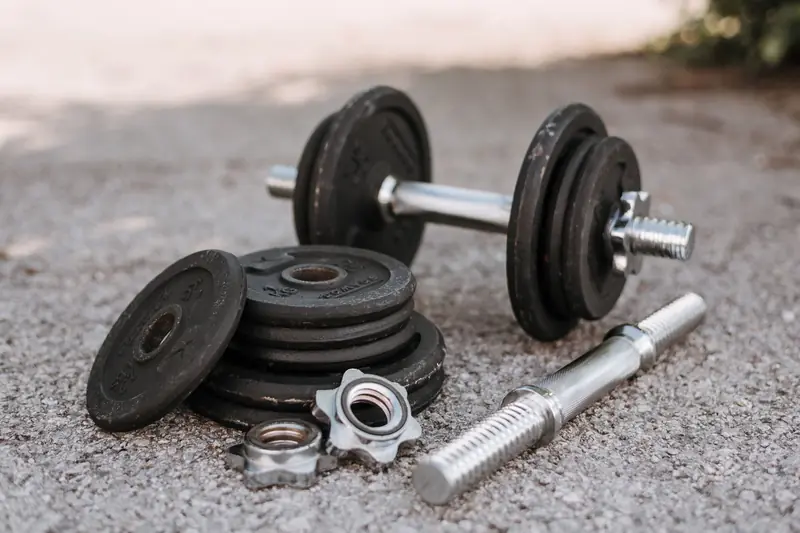
Best Adjustable Dumbbells for Home Gyms
One compact set covers most strength exercises while you build the room.
-
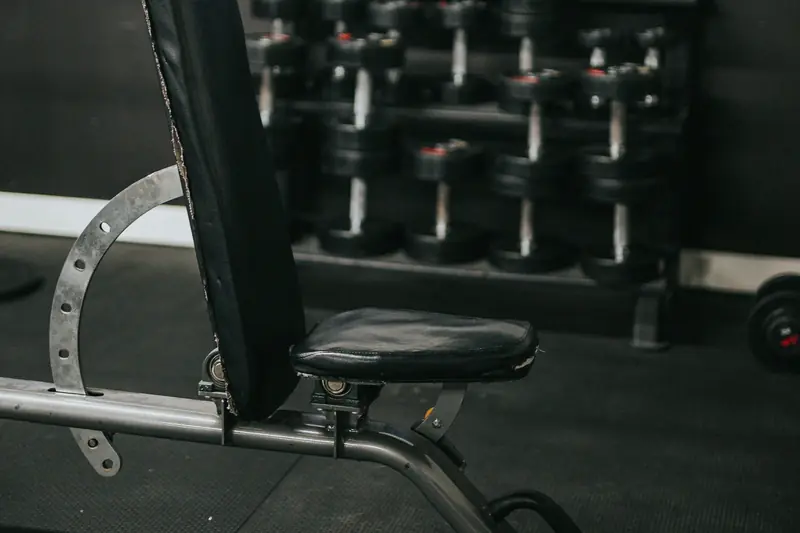
Best Weight Benches for Home Gyms
A bench adds pressing, rowing and incline work to dumbbells.
-

Best Home Gym Flooring
Flooring protects the floor and cuts noise before any heavy gear arrives.

FAQ
What should I buy first?
Flooring, adjustable dumbbells and a bench cover strength work in a small footprint. Add cardio you will use next.
How much room does a treadmill need?
Follow your model's manual. One ProForm manual asks for at least 8 ft behind and 2 ft on each side (ProForm manual).
Are wall studs always the same distance apart?
They are normally 16 or 24 in apart, so check the spacing a wall-mounted rack requires (Zircon manual).
Related
-
Buying guide
Best Adjustable Dumbbells for Home Gyms
Weight range, increments, adjustment type and footprint, side by side.
-
Buying guide
Best Weight Benches for Home Gyms
Flat or adjustable, capacity, positions and storage, side by side.
-
Buying guide
Best Power Racks for Home Gyms
Height, footprint, safeties and capacity for a rack that fits your room.
-
Buying guide
Best Home Gym Flooring
Rubber tiles, rolls, stall mats and foam, for concrete, carpet and garages.
-
Buying guide
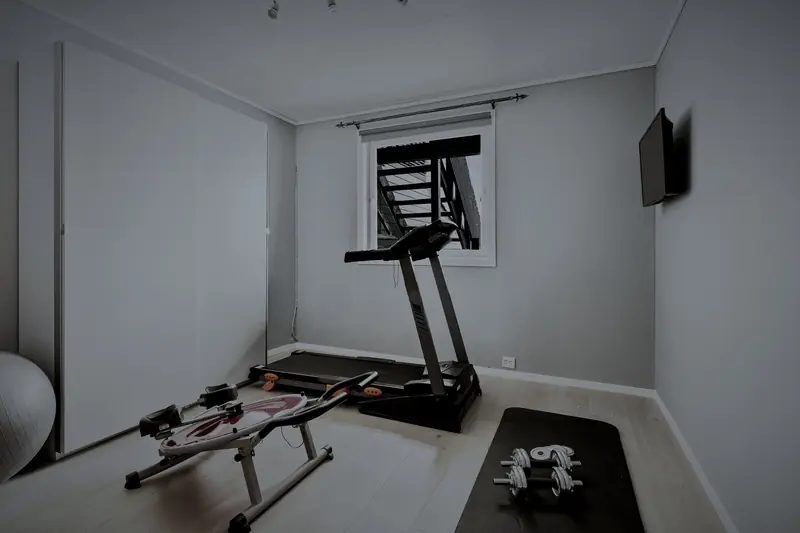
Best Folding Treadmills for Small Spaces
Folded size, running area, motor and incline for small spaces.
-
Guide
How Much Exercise Do You Need Per Week? The Official Numbers
The official weekly numbers for adults and kids, with sample home-gym weeks.
Get the Home Gym Starter Checklist
A printable 8-point checklist built on CDC and ACSM guidance and treadmill manuals. Free, and sized to pin up next to your equipment.